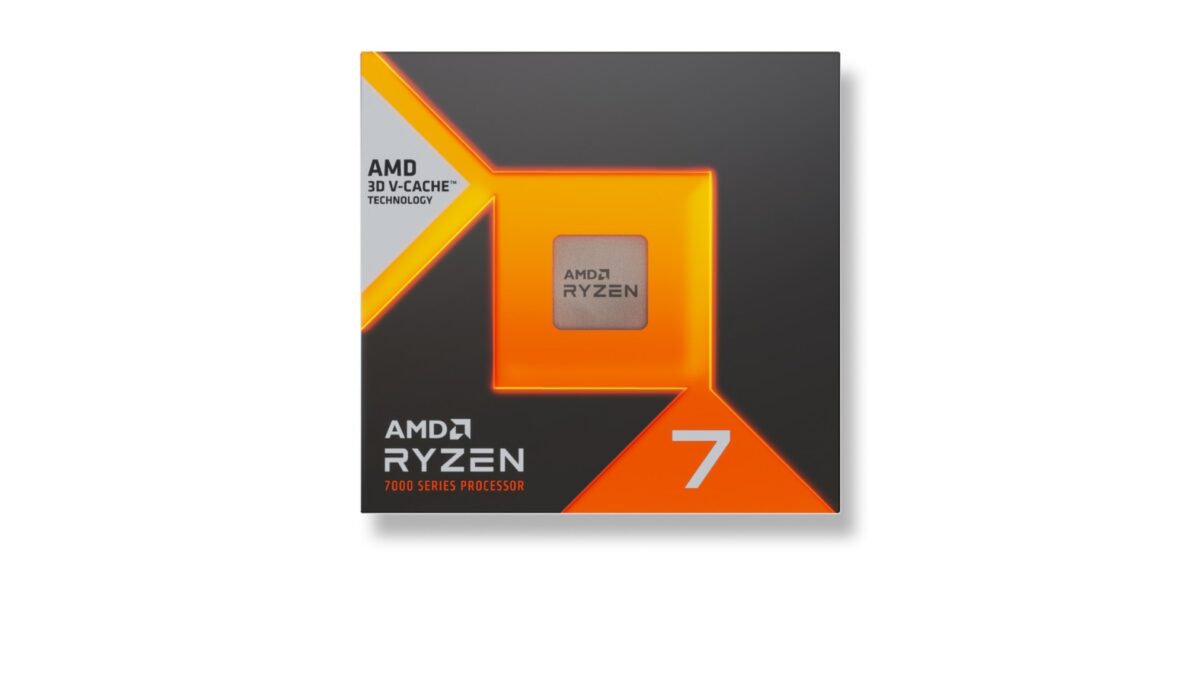
AMD has launched the Ryzen 7 7700X3D desktop processor, with a US pre-order price of $329.00. The chip carries a launch date of July 16, 2026, and slots into AMD’s Ryzen 7000 series lineup for the AM5 platform.
Key highlights include AMD 3D V-Cache technology, an 8-core/16-thread Zen 4 architecture, a 96MB L3 cache, and a boost clock of up to 4.5GHz.
Pricing & Availability
| Model | Launch Price | Region |
|---|---|---|
| AMD Ryzen 7 7700X3D | $329.00 (Pre-Order) | United States |

Quick Links
What We Like About the AMD Ryzen 7 7700X3D
- 96MB of L3 cache via 3D V-Cache — a large on-package cache pool built for latency-sensitive workloads like gaming
- 8 cores / 16 threads on Zen 4 — full SMT support at a 120W default TDP
- AM5 socket with DDR5 and PCIe 5.0 support — fits into the existing Ryzen 7000/9000-series motherboard ecosystem
- AMD EXPO memory overclocking support — paired with Precision Boost Overdrive and Curve Optimizer voltage offsets for tuning
- Native PCIe 5.0 NVMe support — includes Boot, RAID0, RAID1, and RAID10 configurations
Architecture and Cache
The Ryzen 7 7700X3D is built on the Zen 4 architecture, codenamed Raphael AM5, and pairs an 8-core, 16-thread CPU compute die with AMD’s 3D V-Cache stacking. Base clock sits at 4GHz, with boost reaching up to 4.5GHz.
Cache is split across three tiers: 512KB of L1, 8MB of L2, and a 96MB L3 cache — the last of these expanded by the 3D V-Cache die stacked on top of the CPU compute complex. The compute die measures 71mm² and is fabricated on TSMC’s 5nm FinFET process, while the I/O die measures 122mm² on TSMC’s 6nm FinFET process. Default TDP is rated at 120W, and AMD recommends a liquid cooler for optimal performance given the processor’s maximum operating temperature (Tjmax) of 89°C.
Platform and Memory Support
The processor uses the AM5 socket, compatible with A620, X670E, X670, B650E, B650, X870E, X870, B840, and B850 chipsets. It supports DDR5 UDIMM memory across two channels, with a maximum capacity of 128GB and ECC support where the motherboard allows it. Memory speed tops out at DDR5-5200 in single-rank dual-DIMM configurations, or DDR5-3600 across four DIMMs.
Connectivity runs through PCIe 5.0, with 28 total lanes (24 usable). Native USB support includes four USB 3.2 Gen 2 (10Gbps) ports and one USB 2.0 port. Integrated graphics come from AMD Radeon Graphics with two graphics cores clocked at 2200MHz, and the chip supports USB Type-C DisplayPort Alternate Mode.
Overclocking and Tuning Features
AMD includes AMD EXPO memory overclocking technology, Precision Boost Overdrive, and Curve Optimizer voltage offsets on the Ryzen 7 7700X3D, along with support for AMD Ryzen Master software. Boost behavior is managed through Precision Boost 2.
Security Features
The processor includes a broad set of platform security features: AMD Secure Processor, AMD Platform Secure Boot, UEFI Secure Boot, Windows Secured-Core PC support, firmware TPM, AMD-V (SVM) virtualization, AMD-Vi I/O MMU virtualization, Second Level Address Translation (SLAT), AES-NI, and AMD Shadow Stack.
AMD Ryzen 7 7700X3D Specifications / Technical Details
| Specification | Details |
|---|---|
| Name | AMD Ryzen 7 7700X3D |
| Family / Series | Ryzen / Ryzen 7000 Series |
| Architecture | Zen 4 (Raphael AM5) |
| CPU Cores / Threads | 8 / 16 |
| Base Clock | 4 GHz |
| Max. Boost Clock | Up to 4.5 GHz |
| L1 / L2 / L3 Cache | 512 KB / 8 MB / 96 MB |
| Default TDP | 120W |
| Process (CPU Die / I/O Die) | TSMC 5nm FinFET / TSMC 6nm FinFET |
| CCD / IOD Die Size | 71mm² / 122mm² |
| Socket | AM5 |
| Supporting Chipsets | A620, X670E, X670, B650E, B650, X870E, X870, B840, B850 |
| Memory Support | DDR5 UDIMM, 2 channels, up to 128GB |
| Max Memory Speed | DDR5-5200 (2x1R/2x2R), DDR5-3600 (4x1R/4x2R) |
| ECC Support | Yes (requires motherboard support) |
| PCIe Version | PCIe 5.0 (28 total / 24 usable lanes) |
| Integrated Graphics | AMD Radeon Graphics, 2 cores, 2200 MHz |
| USB | 4x USB 3.2 Gen 2 (10Gbps), 1x USB 2.0 |
| AMD EXPO Support | Yes |
| Recommended Cooler | Liquid cooler recommended |
| Max Operating Temp (Tjmax) | 89°C |
| OS Support | Windows 11, Windows 10 (64-bit), RHEL x86 64-bit, Ubuntu x86 64-bit |
| Launch Date | 07/16/2026 |
| Product ID (Boxed) | 100-100002235WOF |
| Product ID (Tray) | 100-000002235 |
AMD Ryzen 7 7700X3D vs AMD Ryzen 7 7700X
AMD’s existing Ryzen 7 7700X, launched in September 2022, shares the same 8-core/16-thread Zen 4 layout and AM5 socket but skips 3D V-Cache in favor of a higher clock ceiling. Here’s how the two compare:
| Feature | Ryzen 7 7700X3D | Ryzen 7 7700X |
|---|---|---|
| Architecture | Zen 4 | Zen 4 |
| Cores / Threads | 8 / 16 | 8 / 16 |
| Base Clock | 4 GHz | 4.5 GHz |
| Max. Boost Clock | Up to 4.5 GHz | Up to 5.4 GHz |
| L3 Cache | 96 MB | 32 MB |
| Total Cache | 104.5 MB | 36.5 MB |
| Default TDP | 120W | 105W |
| Unlocked for Overclocking | Not listed | Yes |
| Recommended Cooler | Liquid cooler | Premium air cooler |
| Max Operating Temp (Tjmax) | 89°C | 95°C |
| Launch Date | 07/16/2026 | 09/27/2022 |
| Launch Price | $329.00 | — |
The Ryzen 7 7700X’s higher boost clock and standard air-cooling headroom sit against the 7700X3D’s much larger L3 cache from 3D V-Cache stacking — the two chips trade clock speed for cache size within the same core and thread count.
Frequently Asked Questions
What is the AMD Ryzen 7 7700X3D price in the US?
It’s available for pre-order at $329.00, with a launch date of July 16, 2026.
How many cores and threads does the AMD Ryzen 7 7700X3D have?
It has 8 cores and 16 threads, built on AMD’s Zen 4 architecture.
What socket does the AMD Ryzen 7 7700X3D use?
It uses the AM5 socket, compatible with chipsets including X670E, X670, B650E, B650, X870E, X870, B840, B850, and A620.
How does the AMD Ryzen 7 7700X3D differ from the Ryzen 7 7700X?
The 7700X3D trades clock speed for cache — it tops out at 4.5GHz boost versus 5.4GHz on the 7700X, but carries 96MB of L3 cache from 3D V-Cache stacking compared to 32MB on the non-3D variant.
Does the AMD Ryzen 7 7700X3D support DDR5 memory?
Yes, it supports DDR5 UDIMM memory across two channels, up to 128GB, with speeds up to DDR5-5200 depending on configuration.
What cooler does AMD recommend for the Ryzen 7 7700X3D?
AMD recommends a liquid cooler for optimal performance. The processor ships without an included thermal solution.
Related Articles on Tech Stories India
- AMD Ryzen 7 5800X3D (100-100000651POF) 10th Anniversary Edition Desktop Processor Available for Pre-Order on Amazon US – 8 Cores, 3D V-Cache, 96MB L3, AM4
- AMD Ryzen 9 9950X3D2 Dual Edition Desktop Processor Launched Globally – 16 Cores Zen 5, 192MB 3D V-Cache, 5.6 GHz Boost – Available on Amazon
- Lenovo Legion Tower 5 2026 90YJ00A7US Gaming Desktop Listed on Amazon US – RTX 5070 12GB, Ryzen 7 7800X3D, 32GB DDR5, 200W Liquid Cooling
- ASUS ROG Strix X870E-E Gaming WiFi7 Neo AMD ATX Motherboard Listed on Amazon US – AMD X870E, Five M.2 Slots, WiFi 7, Dual USB4 40Gbps
- Intel Core Ultra 7 270K Plus Desktop Processor Listed on Amazon US – 24 Cores, 5.5 GHz, TSMC N3B, 36 TOPS, LGA1851, 125W/250W
Note: Specifications listed above are based on AMD’s official product page and may not be 100% accurate. Please visit the official AMD website to verify complete and up-to-date specifications and regional pricing before making a purchase decision.
Disclaimer: This post summarizes an AMD product launch for informational purposes. It is not affiliated with or endorsed by AMD.